Strength Training Myths for Women 50+
If you still think lifting weights will make you bulky after 50, the following may completely change the way you look at exercise. The truth is that strength training is one of the most useful things women over 50 can do for muscle, bone health, balance, and everyday independence.”
STRENGTH TRAINING
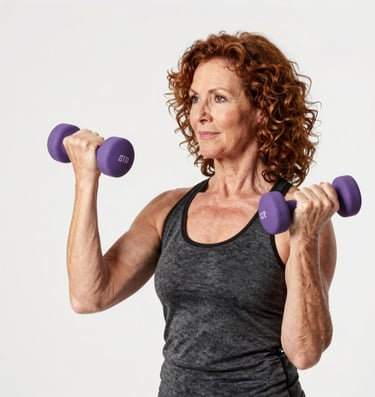
Myth number one: lifting weights makes women bulky.
This is probably the most common myth, and it keeps many women from ever picking up a dumbbell. In reality, building very large muscles is not something that happens easily, especially not from a basic strength routine done two or three times a week. What most women over 50 actually notice from strength training is that they feel firmer, stronger, more stable, and more capable in daily life. Strength training supports lean muscle, and lean muscle helps with movement, posture, and function. For many women, the result is not bulk. It is better shape, better strength, and better confidence in their body.
Myth number two: cardio is enough.
Cardio is valuable for heart health, but it does not replace resistance training. Walking, cycling, or swimming are great, but they do not give the same muscle and bone-loading benefit as lifting weights or using resistance bands. Strength training places useful demand on muscles and bones, which is one reason it is so often recommended for healthy ageing. For older adults, physical activity guidance consistently includes both aerobic activity and muscle-strengthening work, not one or the other.
Myth number three: it is too late to start after 50.
This one is simply false. You can benefit from strength training whether you are 52, 62, or 82. Research and healthy ageing guidance show that older adults can still improve strength, function, and physical confidence when they begin appropriate training later in life. The key is to start at your current level, use manageable resistance, focus on good form, and progress gradually. You do not need an athletic background. You just need a sensible starting point.
Myth number four: strength training is bad for your joints.
When done with proper form and sensible progression, strength training can actually support joint health by strengthening the muscles around the joints and improving movement control. Problems usually come from doing too much, too soon, or using poor technique, not from strength training itself. In fact, being inactive can make weakness and instability worse over time. A gradual programme with movements like chair squats, rows, presses, step-ups, and hip hinges can help build support around the body in a practical way.
Myth number five: lifting weights is only about appearance.
This is where the conversation needs to change. For women over 50, strength training is not mainly about looks. It is about protecting quality of life. It can help support bone density, preserve muscle, improve balance, and make everyday tasks like climbing stairs, carrying shopping, standing up from a chair, or getting off the floor feel easier and safer. The NHS highlights strength and balance work as important for reducing falls and fractures as we age, and evidence reviews show resistance training can positively affect bone mineral density in postmenopausal women.
So what should women over 50 actually do?
Keep it simple. Aim for at least two strength sessions a week. Focus on the major movement patterns: pushing, pulling, squatting, hinging, and carrying. Use dumbbells, resistance bands, machines, or bodyweight variations depending on your starting level. Add balance work, especially if steadiness is becoming more important. And remember that progress does not have to mean lifting very heavy very quickly. Progress can mean better form, more control, slightly more resistance, or simply feeling stronger doing daily tasks.
If you are brand new, start with one or two sets of basic movements, take your time, and leave your ego out of it. If you have osteoporosis, joint pain, or a long-term health condition, getting advice from a qualified professional before starting can help you train more safely and confidently. Public guidance for older adults consistently recommends building up gradually and adjusting activity to your abilities and conditions.
The biggest mindset shift is this: strength training after 50 is not extreme, and it is not optional if you care about healthy ageing. It is one of the best tools you have to stay capable, independent, and strong. If this video helped clear up some of the myths, share it with another woman who needs to hear this, and let me know in the comments which myth you used to believe.
Today, we are breaking down the biggest strength-training myths for women over 50, because too many women avoid one of the most beneficial forms of exercise simply due to outdated advice. If you are in your 50s, 60s, or beyond, your body is not asking you to do less. It is asking you to train smarter. As we age, we naturally lose muscle and bone strength, and regular muscle-strengthening activity becomes even more important. Public health guidance from the CDC and the NHS recommends strength-focused activity at least two days a week, and for older adults, balance work matters too because it supports stability and independence.